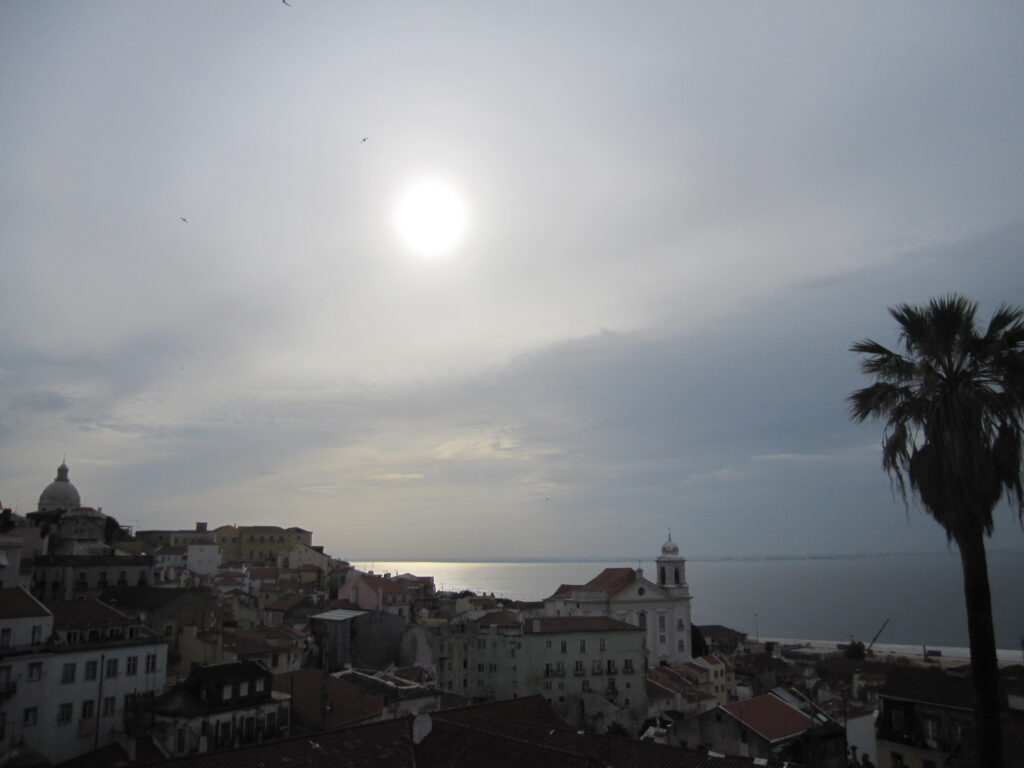
Quick answer: Start with Baixa for a straightforward first visit, particularly if you want to limit uphill walking. Choose Chiado for cafés, shopping and evenings out; Alfama if historic streets and fado matter more than easy luggage access; or lower Avenida da Liberdade, near Restauradores, for a boulevard base connected to the historic center. These are planning recommendations, not accessibility guarantees: check the exact address, entrance and room before booking. Lisbon’s official guidance identifies easier walking conditions in Baixa and more challenging slopes around Chiado and Alfama. (visitportugal.com)
This guide assumes a first leisure visit of roughly three to five nights, without a rental car. The neighborhood choice does not depend on nationality or departure airport; the transfer advice assumes arrival at Lisbon’s Humberto Delgado Airport.
Transport diagrams and accommodation descriptions checked on October 6, 2026. Reconfirm services, access arrangements and booking terms for your travel dates.
1. Compare the four bases by your daily routine
Choose your base around the journeys you will repeat: returning after dinner, taking a midday break and carrying luggage on arrival. A central address is less useful if its final approach is difficult for your party.
| Base | Strongest reason to choose it | Main walking trade-off | Metro stations to investigate |
|---|---|---|---|
| Baixa | Downtown sightseeing and relatively straightforward walking | Easier terrain does not mean every entrance is step-free | Rossio, Baixa-Chiado, Terreiro do Paço |
| Chiado | Cafés, shops and access to evening entertainment | Sloping streets between the district and lower downtown | Baixa-Chiado |
| Alfama | Historic lanes, viewpoints and fado | Steep, winding streets can complicate luggage and daily returns | Santa Apolónia or Terreiro do Paço, depending on the address |
| Avenida da Liberdade | A boulevard base with several transport options | The lower and upper ends serve different walking routines | Restauradores, Avenida, Marquês de Pombal |
The comparison combines official destination descriptions, walking guidance and the Metro network map. Station proximity must be checked against the actual property—not just its neighborhood label. (visitlisboa.com)
Noise is a room-level question. Official tourism information highlights evening activity around Chiado and nearby Bairro Alto, and fado venues in Alfama, but it does not establish which accommodation is quiet. Ask about room orientation, nearby venues and window insulation rather than treating any district as uniformly peaceful. (visitlisboa.com)
2. Baixa: the strongest starting point for simpler sightseeing
Baixa makes sense when your priority is getting out of the accommodation and into downtown sightseeing with fewer terrain complications. Its shops, museums and food venues sit within the historic center. The official accessible-tour guidance describes flat surfaces around Rossio, pedestrianized Rua Augusta and even surfaces at Praça do Comércio. (visitlisboa.com)
For a short break, that supports a manageable sightseeing pattern: explore downtown, pause by the river and return to your accommodation before dinner.
The important limitation is the building itself. Lisbon’s municipal accessibility guide recommends checking whether accommodation meets your particular needs and asking for photographs of adapted rooms. A favorable neighborhood cannot compensate for an unsuitable entrance or bathroom. (storage.sbcevents.com)
Before booking, ask:
- Are there steps between the pavement and reception?
- Does the lift reach the booked room’s floor?
- Which station exit gives the simplest approach?
- Can a vehicle stop at the entrance, or is there a final walk?
Best fit: first-time couples, solo travelers and families who prioritize a straightforward downtown base over a hilltop setting.
3. Chiado: choose it for cafés and evenings, with slopes in mind
Chiado is a useful alternative if browsing shops, sitting at pavement cafés and spending evenings nearby are central to your trip. Visit Lisboa describes its mix of traditional and contemporary shops, while its city-center overview identifies Chiado and neighboring Bairro Alto as areas for cultural entertainment and evening activity. (visitlisboa.com)
The trade-off is terrain. Official walking guidance warns that steep slopes around Chiado can make movement difficult, even where routes otherwise permit access. Do not interpret “near Baixa-Chiado station” as a promise of an easy walk to the door. (visitportugal.com)
Trace the route from the relevant station exit to the accommodation. Then check the route back from your likely dinner area. A walk you would enjoy once may become less appealing after several full sightseeing days.
For sleeping conditions, ask whether the room faces the street or an internal courtyard. If you intend to sleep early, make that requirement explicit rather than simply requesting “a nice view.”
Best fit: a couple wanting cafés and evening options, or a family finding a suitable serviced apartment and accepting the surrounding slopes.
4. Alfama: stay for the setting, not effortless logistics
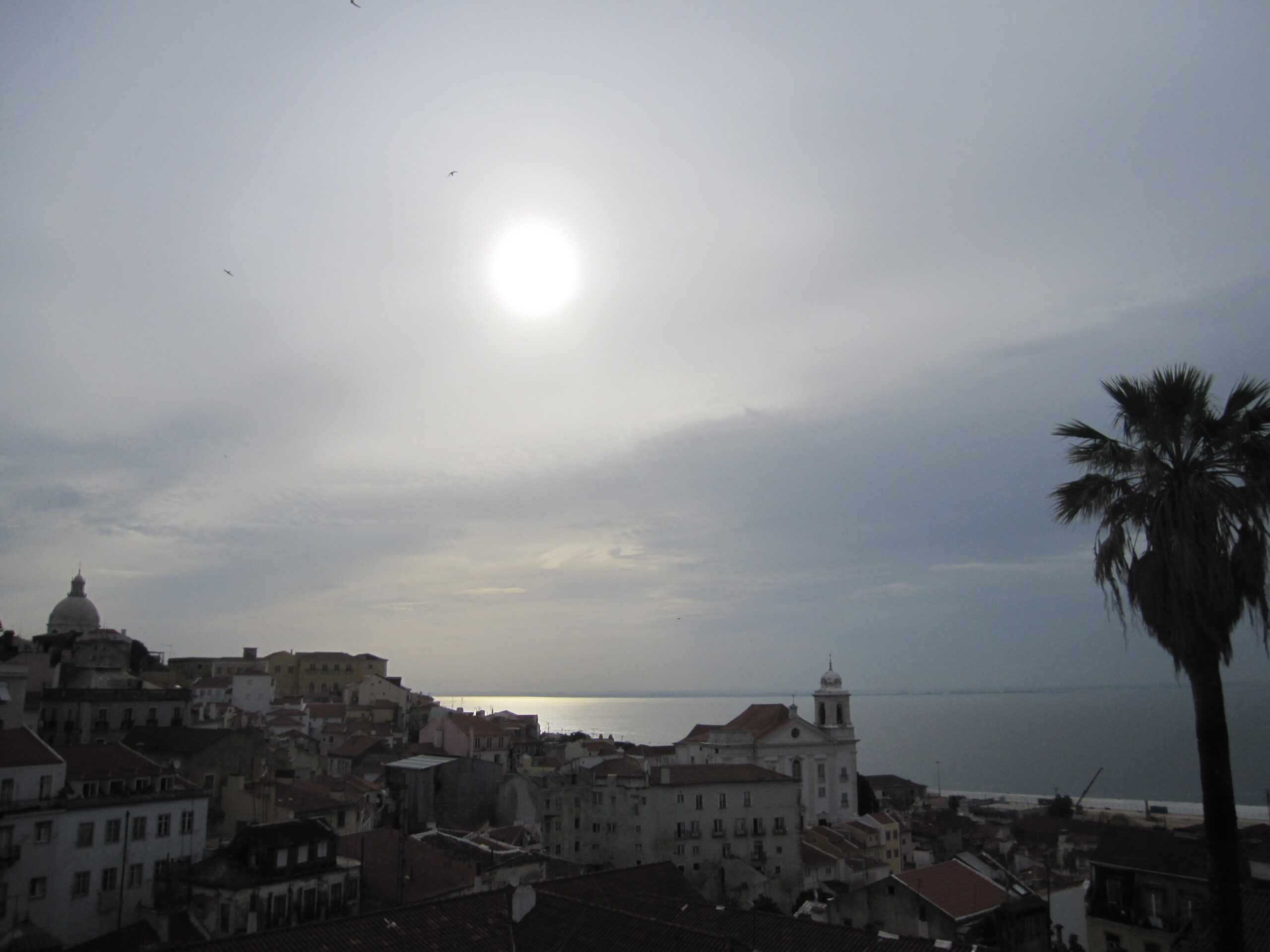
Alfama suits travelers who actively want historic lanes, viewpoints and fado close to their accommodation. Visit Lisboa’s description emphasizes cobblestones, small streets, uphill exploration and evening restaurants and fado houses. (visitlisboa.com)
Its terrain deserves attention before payment. Portugal’s official tourism guidance describes steep, winding Alfama streets as difficult for people with mobility limitations. That makes the exact route particularly important for anyone using a stroller, carrying substantial luggage or trying to avoid demanding walks. (visitportugal.com)
Do not choose a station solely by straight-line distance. Santa Apolónia and Terreiro do Paço serve different approaches around the district’s edges; neither station name tells you how difficult the remaining route will be. (metrolisboa.pt)
Ask the accommodation to explain:
- The nearest usable vehicle drop-off point.
- Any outdoor stairs between that point and the entrance.
- Whether luggage assistance is available.
- The internal stairs and lift arrangements.
A taxi can reduce the journey from the airport, but it does not verify the final approach. Similarly, an adapted room does not automatically make the surrounding streets suitable.
Best fit: travelers happy to trade some convenience for Alfama’s setting. If easy movement is your priority, consider visiting Alfama from another base instead.

5. Avenida da Liberdade: distinguish the lower end from the upper end
Avenida da Liberdade provides a different kind of base: a tree-lined boulevard leading from the Marquês de Pombal area toward Baixa. Official destination material emphasizes its shops, terraces and connection with downtown. (visitportugal.com)
For a sightseeing-focused first visit, start your search near the lower end, around Restauradores. This recommendation follows the boulevard’s position relative to downtown, rather than a claim that all properties there are better. Farther uphill, compare accommodation near Avenida or Marquês de Pombal if those station locations suit your plans. All three stations appear on the Blue Line. (visitportugal.com)
Be careful with “near Avenida da Liberdade.” Inspect the exact street and approach instead of assuming the property sits directly on the boulevard.
Also, do not assume the nearest Metro station provides the access you need. The August 2026 accessibility diagram marks step-free provision at Restauradores and Marquês de Pombal, but not at Avenida. Equipment availability still requires a separate check. (metrolisboa.pt)
Best fit: travelers seeking a boulevard-based hotel stay, especially those willing to choose a lower-end address carefully rather than relying on a broad neighborhood description.
6. Check the airport connection and the complete access route
Lisbon Airport has a Metro station on the Red Line. However, reaching these four bases normally involves changing lines; the airport’s advertised journey to Saldanha is not a door-to-door estimate for your accommodation. (lisbonairport.pt)
Using the checked network diagram, investigate these routes:
- Baixa or Chiado: Red Line to Alameda, then Green Line toward Rossio or Baixa-Chiado.
- Avenida da Liberdade: Red Line to São Sebastião, then Blue Line toward Marquês de Pombal, Avenida or Restauradores.
- Alfama: Red Line to São Sebastião, then Blue Line toward Terreiro do Paço or Santa Apolónia, followed by an address-specific approach. (metrolisboa.pt)
Choose the route that fits your accommodation and mobility needs, not simply the fewest stops.
If step-free travel matters, consult the operator’s accessibility diagram and line-and-lift status page before departure. Lisbon’s municipal guide is useful for broader planning, but it is not a live equipment-status service. (metrolisboa.pt)
For a taxi transfer, use the official airport arrangements. The airport advises travelers to use licensed transport rather than accept approaches inside the terminal, and to check that the taxi meter is switched on and request a receipt. (lisbonairport.pt)
7. Compare room layouts and total costs—not neighborhood price stereotypes
These published accommodation samples, checked on October 6, 2026, illustrate room-layout differences. They are not tested recommendations or confirmed availability for particular stay dates.
| Area and example | Verified published detail | Practical implication |
|---|---|---|
| Baixa: My Story Hotel Ouro | Double and twin rooms are approximately 12 m²; a communicating family category comprises two connected rooms, approximately 24 m² combined, for up to four people | Check whether you need separate bedrooms rather than one compact room |
| Chiado: Martinhal Lisbon Chiado | Its one-bedroom deluxe apartment lists a living room, kitchenette and capacity for two adults and two children | An apartment layout may match a family’s needs better than a standard double |
| Alfama: memmo Alfama | Standard rooms are listed at 17–22 m²; the hotel welcomes guests aged 16 and over and has no interconnecting rooms | This particular property is unsuitable for families with younger children |
| Avenida: Heritage Avenida Liberdade | Its Baixa Room is listed at 16 m² for two people; the Junior Suite Avenida is 39 m² and also listed for two | More floor space does not necessarily mean higher permitted occupancy |
These details come from the properties’ own room descriptions and policies. Confirm the category, beds and age rules before paying. (mystoryhotels.com)
No comparable, date-specific room-rate quotes were verified for this guide, so there is no defensible “cheapest neighborhood” ranking.
Compare offers using identical dates, guest ages, occupancy, breakfast inclusions and cancellation terms. Add any cleaning charges, extra-bed charges and transport costs shown in the offer.
Lisbon’s published tourist tax is €4 per guest aged 13 or over, per night, for up to seven nights per stay. For two adults staying three nights, that is 2 × 3 × €4 = €24, unless an applicable exemption applies. Check whether your booking total already includes it. (informacoeseservicos.lisboa.pt)
8. Match the base to your party—and make five final checks
A couple on a three-night break: shortlist Baixa if downtown sightseeing and easy returns matter most. Compare Chiado if cafés and evening activity are a bigger priority, accepting its slopes. (visitlisboa.com)
A family needing more space: compare room configurations across neighborhoods before choosing the district. A communicating room in Baixa and a one-bedroom apartment in Chiado solve different problems. Check children’s ages, sleeping arrangements and whether a kitchenette is important. The verified examples show why “family room” and “apartment” should not be treated as interchangeable. (mystoryhotels.com)
A traveler seeking fewer steep walks: start with Baixa’s downtown streets. Consider a carefully checked lower-Avenida address, but verify both the street route and transport access. Neither choice guarantees suitability for a wheelchair or other mobility aid. (visitportugal.com)
Before booking, complete these five checks:
- Exact address: locate the entrance, not just the neighborhood label.
- Arrival: establish the station exit or vehicle drop-off and remaining walk.
- Building access: confirm entrance steps, lifts and the booked room’s requirements.
- Sleeping conditions: ask about room orientation and nearby evening activity.
- Total price: compare the complete stay cost and cancellation deadline.
The best base is the one whose everyday journeys work for your party—not necessarily the one with the most attractive neighborhood photograph.